
Publicaciones 2019 —
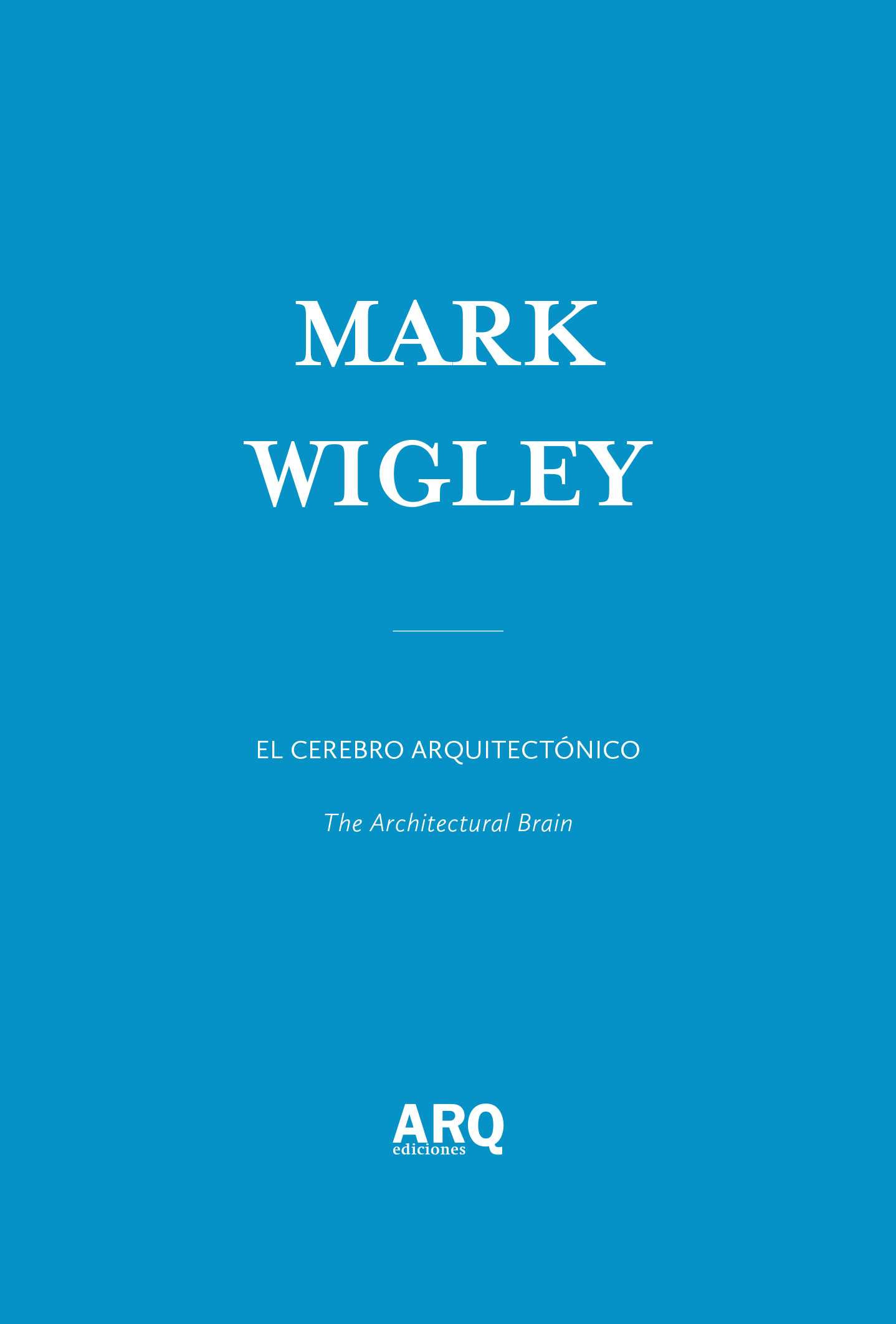
ARQ docs Mark Wigley
Mark Wigley; Francisco Díaz, Rayna Razmilic (eds.)
Tapa blanda; encuadernación a la vista con sobrecubierta
12 x 17 cm | 176 pp.
Español + Inglés
ISBN: 978-956-9571-76-3
Diciembre 2019
Mark Wigley es profesor en GSAPP, Universidad de Columbia (Nueva York), donde fue decano entre 2004 y 2014. Ha escrito extensamente sobre la teoría y la práctica de la arquitectura.
Comprar
Leer en ARQ+
Tapa blanda; encuadernación a la vista con sobrecubierta
12 x 17 cm | 176 pp.
Español + Inglés
ISBN: 978-956-9571-76-3
Diciembre 2019
Mark Wigley es profesor en GSAPP, Universidad de Columbia (Nueva York), donde fue decano entre 2004 y 2014. Ha escrito extensamente sobre la teoría y la práctica de la arquitectura.
Sus libros incluyen: Passing Through Architecture: The 10 Years of Gordon Matta-Clark; Cutting Matta-Clark: The Anarchitecture Investigation (2018); Buckminster Fuller INC: Architecture in the Age of Radio (2015); Casa da Musica / Porto (2008); Constant’s New Babylon: The Hyper Architecture of Desire (1998); White Walls, Designer Dresses: The Fashioning of Modern Architecture (1995); y The Architecture of Deconstruction: Derrida’s Haunt (1995).
Contenidos
Lado A: “El cerebro arquitectónico”
Lado B: “El culto arquitectónico de la sincronización”
Ver más →
Contenidos
Lado A: “El cerebro arquitectónico”
Lado B: “El culto arquitectónico de la sincronización”
Mark Wigley; Francisco Díaz, Rayna Razmilic (eds.)
Softcover; exposed binding with dust jacket
12 x 17 cm | 176 pp.
English + Spanish
ISBN: 978-956-9571-76-3
December 2019
Mark Wigley is a professor at GSAPP, Columbia University (New York), where he served as Dean from 2004 to 2014. He has written extensively on the theory and practice of architecture.
Buy
Read on ARQ+
Softcover; exposed binding with dust jacket
12 x 17 cm | 176 pp.
English + Spanish
ISBN: 978-956-9571-76-3
December 2019
Mark Wigley is a professor at GSAPP, Columbia University (New York), where he served as Dean from 2004 to 2014. He has written extensively on the theory and practice of architecture.
His books include: Passing Through Architecture: The 10 Years of Gordon Matta-Clark; Cutting Matta-Clark: The Anarchitecture Investigation (2018); Buckminster Fuller Inc.: Architecture in the Age of Radio (2015); Casa da Musica / Porto (2008); Constant’s New Babylon: The Hyper-Architecture of Desire (1998); White Walls, Designer Dresses: The Fashioning of Modern Architecture (1995); and The Architecture of Deconstruction: Derrida’s Haunt (1993).
Contents
Side A: “The Architectural Brain”
Side B: “The Architectural Cult of Synchronization”
Read more →
Contents
Side A: “The Architectural Brain”
Side B: “The Architectural Cult of Synchronization”

ARQ 103 | Ecología / Ecology
Libre acceso / Open Access
Francisco Díaz (ed.); varios autores
Tapa blanda
20.6 x 27 cm | 152 pp.
Español + Inglés
ISSN: 0716-0852 / ISSN (online): 0717-6996
Diciembre 2019
El clima cambió. Hace unos meses, cuando decidimos hacer un número sobre ecología difícilmente pensamos que nos tocaría hacerlo en un país con un ambiente tan enrarecido. De tanto escuchar la palabra sustentabilidad se nos había olvidado reparar en lo más obvio: que el sistema no se sustenta. La primavera chilena de este 2019 reencauzó la conversación y retrotrajo el horizonte a mediados de los años setenta cuando, mientras en Chile se violaban los derechos humanos, la crisis climática surgía como tema de preocupación entre los científicos alrededor del planeta.
Comprar
Leer en ARQ+
⤓ PDF (SciELO)
Tapa blanda
20.6 x 27 cm | 152 pp.
Español + Inglés
ISSN: 0716-0852 / ISSN (online): 0717-6996
Diciembre 2019
El clima cambió. Hace unos meses, cuando decidimos hacer un número sobre ecología difícilmente pensamos que nos tocaría hacerlo en un país con un ambiente tan enrarecido. De tanto escuchar la palabra sustentabilidad se nos había olvidado reparar en lo más obvio: que el sistema no se sustenta. La primavera chilena de este 2019 reencauzó la conversación y retrotrajo el horizonte a mediados de los años setenta cuando, mientras en Chile se violaban los derechos humanos, la crisis climática surgía como tema de preocupación entre los científicos alrededor del planeta.
Hace unos meses, con la certeza que nos daba nuestro precario aparataje de conocimientos y referencias, sabíamos que el planeta no iba a desaparecer por el calentamiento global, sino que sería nuestra especie. Por eso argumentábamos que los más pobres serían las principales víctimas del cambio climático. Pero no éramos conscientes —ni nos habíamos preocupado de serlo— de que, con o sin cambio climático, ellos ya eran víctimas de este sistema. Hoy quedamos atónitos tras ver ese fuego quemando edificios y bloqueando calles en las que nos movemos a diario. Pero no nos dábamos cuenta de que la destrucción producida por el fuego es tan violenta como el ambiente en el que viven miles de familias en nuestras mismas ciudades, allá donde no llegan las cámaras y desde donde el humo no se ve. Ante eso, las revistas son instrumentos lentos. No pueden ni les corresponde responder a la contingencia. Aún así, el contenido de este número de ARQ bien puede ser un espejo que refleje de otra forma lo que está pasando (extracto editorial).
Contenidos
La maloca de los Matsés. Construcción de un habitar colectivo en la Amazonía — Samuel Bravo Silva
Calentamiento social — Francisco Díaz
Vida vegetal — Rosetta S. Elkin, Stephannie Fell, Francisco Quintana
Recuperando la arquitectura de la planta — Sylvia Lavin
Teatro della Terra Alienata. Pabellón nacional australiano en la XX Trienal de Milán, 2019 — Amaia Sánchez Velasco, Miguel Rodríguez Casellas, Jorge Valiente, Gonzalo Valiente, GRANDEZA + BAJEZA
Rachel Carson y su ataque a la verdolatría — Romy Hecht
Breve historia (arquitectónica) del siglo XX. Revisión, celebración y homenaje a 40 años de «Breve historia de América», de Robert Crumb — Luis Miguel Lus Arana
Parque Pachacamac: el zócalo y el manto — Pablo Alfaro, Kushal Lachhwani, Tomás Mackay
Lina Bo Bardi y el suburbio — Cláudia Costa Cabral
Arquitectura y ecología: el Cementerio General de Santiago como un caso ejemplar — Wilfried Kuehn, Kim Courrèges, Felipe de Ferrari
Geografía, ciudad y la construcción de un paisaje. Proyecto para el parque metropolitano sur, Cerros de Chena — Teodoro Fernández, Danilo Martic, Arturo Lyon
¿Qué ecología? — Tatiana Carbonell
Habilitación de servicios básicos para la Estación Patagonia — Germán Guzmán, Francisco Chateau, Diego Arroyo, Felipe Elton, Cristián Schmitt
Sublime natural, sublime tecnológico. Debates en torno a la valoración de la naturaleza en el río Pilmaiquén, Chile (1920-1945) — Rodrigo Booth
Ver más →
Contenidos
La maloca de los Matsés. Construcción de un habitar colectivo en la Amazonía — Samuel Bravo Silva
Calentamiento social — Francisco Díaz
Vida vegetal — Rosetta S. Elkin, Stephannie Fell, Francisco Quintana
Recuperando la arquitectura de la planta — Sylvia Lavin
Teatro della Terra Alienata. Pabellón nacional australiano en la XX Trienal de Milán, 2019 — Amaia Sánchez Velasco, Miguel Rodríguez Casellas, Jorge Valiente, Gonzalo Valiente, GRANDEZA + BAJEZA
Rachel Carson y su ataque a la verdolatría — Romy Hecht
Breve historia (arquitectónica) del siglo XX. Revisión, celebración y homenaje a 40 años de «Breve historia de América», de Robert Crumb — Luis Miguel Lus Arana
Parque Pachacamac: el zócalo y el manto — Pablo Alfaro, Kushal Lachhwani, Tomás Mackay
Lina Bo Bardi y el suburbio — Cláudia Costa Cabral
Arquitectura y ecología: el Cementerio General de Santiago como un caso ejemplar — Wilfried Kuehn, Kim Courrèges, Felipe de Ferrari
Geografía, ciudad y la construcción de un paisaje. Proyecto para el parque metropolitano sur, Cerros de Chena — Teodoro Fernández, Danilo Martic, Arturo Lyon
¿Qué ecología? — Tatiana Carbonell
Habilitación de servicios básicos para la Estación Patagonia — Germán Guzmán, Francisco Chateau, Diego Arroyo, Felipe Elton, Cristián Schmitt
Sublime natural, sublime tecnológico. Debates en torno a la valoración de la naturaleza en el río Pilmaiquén, Chile (1920-1945) — Rodrigo Booth
Francisco Díaz (ed.); several authors
Softcover
20.6 x 27 cm | 152 pp.
English + Spanish
ISSN: 0716-0852 / ISSN (online): 0717-6996
December 2019
The climate changed. A few months ago, when we decided to dedicate an issue to ecology, we never thought we would have to do it in a country with such a rarefied environment. After relentlessly hearing the word sustainability, we forgot to attend to the most obvious: the system’s inability to sustain itself. The Chilean spring of this 2019 refocused the conversation and rolled back the horizon to the mid-1970s, when, while in Chile human rights were violated, the climate crisis emerged as a matter of concern among scientists around the planet.
Buy
Read on ARQ+
⤓ PDF (SciELO)
Softcover
20.6 x 27 cm | 152 pp.
English + Spanish
ISSN: 0716-0852 / ISSN (online): 0717-6996
December 2019
The climate changed. A few months ago, when we decided to dedicate an issue to ecology, we never thought we would have to do it in a country with such a rarefied environment. After relentlessly hearing the word sustainability, we forgot to attend to the most obvious: the system’s inability to sustain itself. The Chilean spring of this 2019 refocused the conversation and rolled back the horizon to the mid-1970s, when, while in Chile human rights were violated, the climate crisis emerged as a matter of concern among scientists around the planet.
A few months ago, with the certainty given by our precarious apparatus of knowledge and references, we knew that what is in danger of disappearing due to global warming is not the planet, but us as a species. That is precisely why we argued that the poorest would be the main victims of climate change. But what we failed to take into account—or even consider—was that, with or without climate change, they were already victims of this system. Today, we are stunned by burning buildings and flaming barricades blocking the streets in which we move daily. And still, we failed to realize that the destruction caused by the fire is as violent as the environment in which thousands of families live in our cities, far from the spotlight and from where smoke is not seen. In the face of these situations, magazines are slow instruments. They cannot and should not respond to contingency. However, the content of this issue of ARQ may very well be a mirror that reflects in another way what is happening (editorial excerpt).
Contents
The Matsés Maloca. Building a Collective Dwelling in the Amazon — Samuel Bravo Silva
Social Warming — Francisco Díaz
Plant Life — Rosetta S. Elkin, Stephannie Fell, Francisco Quintana
Reclaiming Plant Architecture — Sylvia Lavin
Teatro della Terra Alienata. Australian National Pavilion at the XXII Milan Triennial, 2019 — Amaia Sánchez Velasco, Miguel Rodríguez Casellas, Jorge Valiente, Gonzalo Valiente, GRANDEZA + BAJEZA
Rachel Carson and Her Attack on Greenery — Romy Hecht
A Short (Architectural) History of the Twentieth Century. Review, Celebration, and Tribute to 40 Years of Robert Crumb’s “A Short History of America” — Luis Miguel Lus Arana
Pachacamac Park: The Plinth and the Mantle — Pablo Alfaro, Kushal Lachhwani, Tomás Mackay
Lina Bo Bardi and the Suburb — Cláudia Costa Cabral
Architecture and Ecology: Santiago’s Cementerio General as a Case in Point — Wilfried Kuehn, Kim Courrèges, Felipe de Ferrari
Geography, City, and the Construction of a Landscape. Project for the Southern Metropolitan Park, Cerros de Chena — Teodoro Fernández, Danilo Martic, Arturo Lyon
What Ecology? — Tatiana Carbonell
Enabling Basic Services for Patagonia Station — Germán Guzmán, Francisco Chateau, Diego Arroyo, Felipe Elton, Cristián Schmitt
Natural Sublime, Technological Sublime. Debates around the Appreciation of the Nature of the Pilmaiquén River, Chile (1920-1945) — Rodrigo Booth
Read more →
Contents
The Matsés Maloca. Building a Collective Dwelling in the Amazon — Samuel Bravo Silva
Social Warming — Francisco Díaz
Plant Life — Rosetta S. Elkin, Stephannie Fell, Francisco Quintana
Reclaiming Plant Architecture — Sylvia Lavin
Teatro della Terra Alienata. Australian National Pavilion at the XXII Milan Triennial, 2019 — Amaia Sánchez Velasco, Miguel Rodríguez Casellas, Jorge Valiente, Gonzalo Valiente, GRANDEZA + BAJEZA
Rachel Carson and Her Attack on Greenery — Romy Hecht
A Short (Architectural) History of the Twentieth Century. Review, Celebration, and Tribute to 40 Years of Robert Crumb’s “A Short History of America” — Luis Miguel Lus Arana
Pachacamac Park: The Plinth and the Mantle — Pablo Alfaro, Kushal Lachhwani, Tomás Mackay
Lina Bo Bardi and the Suburb — Cláudia Costa Cabral
Architecture and Ecology: Santiago’s Cementerio General as a Case in Point — Wilfried Kuehn, Kim Courrèges, Felipe de Ferrari
Geography, City, and the Construction of a Landscape. Project for the Southern Metropolitan Park, Cerros de Chena — Teodoro Fernández, Danilo Martic, Arturo Lyon
What Ecology? — Tatiana Carbonell
Enabling Basic Services for Patagonia Station — Germán Guzmán, Francisco Chateau, Diego Arroyo, Felipe Elton, Cristián Schmitt
Natural Sublime, Technological Sublime. Debates around the Appreciation of the Nature of the Pilmaiquén River, Chile (1920-1945) — Rodrigo Booth
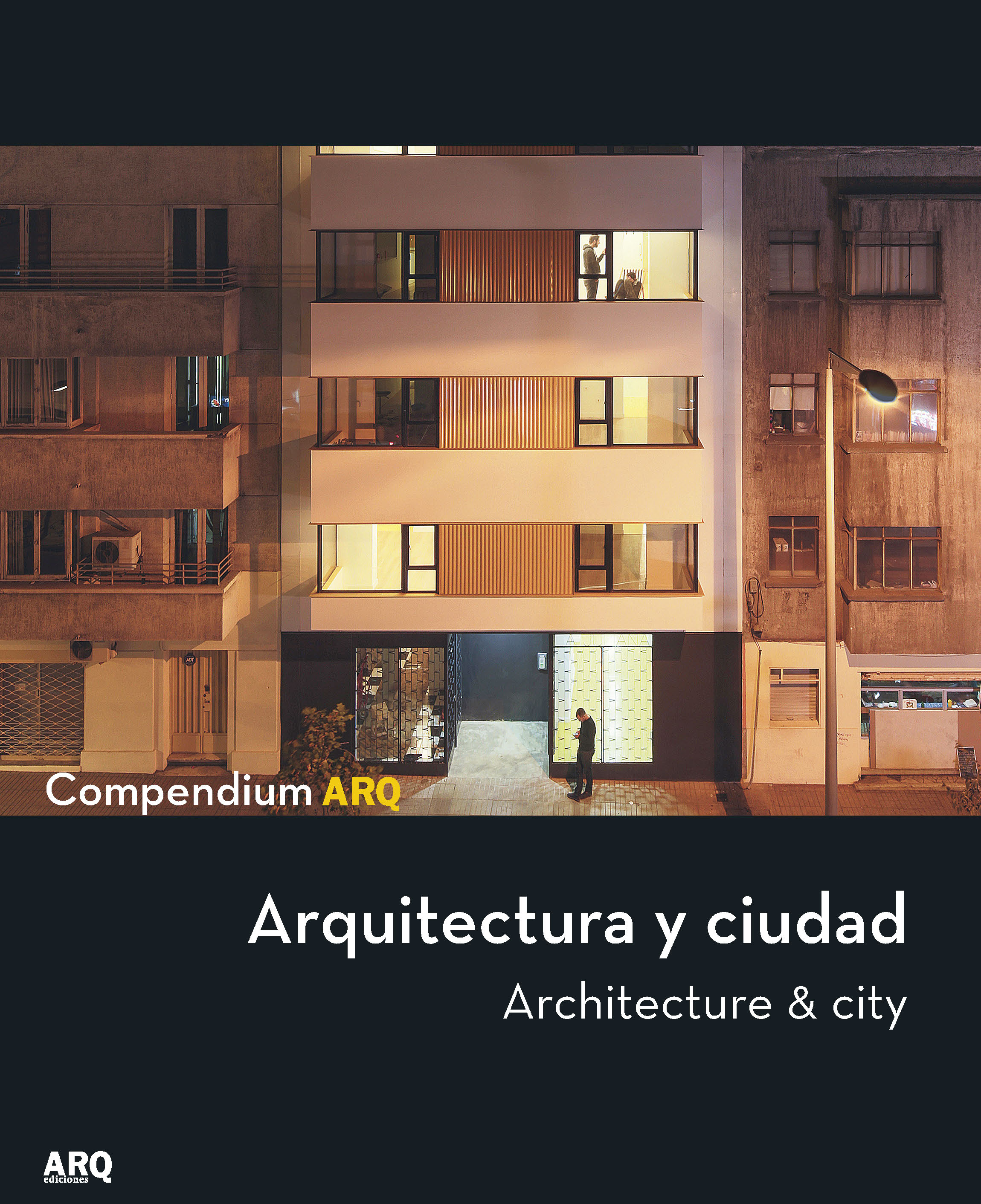
Compendium ARQ. Arquitectura y ciudad / Architecture and City
Francisco Díaz (ed.)
Tapa blanda
21 x 29 cm | 80 pp.
Español + Inglés
ISBN: 978-956-9571-73-2
Octubre 2019
Este tercer volumen de la serie Compendium ARQ está dedicado a los edificios que construyen ciudad, aportando a la calidad de vida urbana. El objetivo es destacar aquellos proyectos que no temen enfrentar las complejidades de la condición urbana —desde las demandas ciudadanas a las del mercado inmobiliario— sino, por el contrario, las entienden como parte de la riqueza a la que la arquitectura debe sumar.
Comprar
Comprar (internac.)
Leer en ARQ+
Tapa blanda
21 x 29 cm | 80 pp.
Español + Inglés
ISBN: 978-956-9571-73-2
Octubre 2019
Este tercer volumen de la serie Compendium ARQ está dedicado a los edificios que construyen ciudad, aportando a la calidad de vida urbana. El objetivo es destacar aquellos proyectos que no temen enfrentar las complejidades de la condición urbana —desde las demandas ciudadanas a las del mercado inmobiliario— sino, por el contrario, las entienden como parte de la riqueza a la que la arquitectura debe sumar.
En ese sentido, queremos relevar lo que entendemos como una nueva actitud de la práctica arquitectónica en Chile, caracterizada por un compromiso con la complejidad y los requerimientos externos a la profesión, distante del interés por arquitecturas autorreferentes, asociadas a encargos únicos en lugares exentos de las tensiones de la ciudad contemporánea.
Los proyectos elegidos son posteriores a 2010 y están construidos en áreas urbanas de Chile. Van desde edificios públicos en pequeños pueblos (donde el propio proyecto es el que construye la condición urbana) hasta edificios de vivienda insertos en la metrópolis (capaces de desaparecer en la trama sin dejar de mostrar que densificar no es lo mismo que explotar el suelo). En suma, arquitecturas que meten los pies en el barro y logran salir sin enlodarse. Una nueva actitud, menos aséptica hacia el entorno, que esperamos destacar con este compendio.
Contenidos
Conjunto Urbano Gabriel Palma — Francisco Izquierdo + PAUR
Centro de Salud Familiar de Chillepín — Carreño Sartori Arquitectos
Edificio Estación — Ortúzar Gebauer Arquitectos
Municipalidad de Nancagua — Beals Lyon Arquitectos
Edificio Escuela de Arquitectura UC — Gonzalo Claro Riesco
Proyecto ERC — MAPAA
Conjunto Alcántara — Cristián Izquierdo
Liceo Polivalente Nahuelbuta de Contulmo — Sol Pérez M., Pedro Hoffmann, Francisco J. Correa
Edificio Ombu — Mas Fernández Arquitectos
INACAP Santiago Centro — Estudio Larraín Arquitectos
Townhouses Casa Holanda — 57STUDIO Arquitectos
Edificio La Juliana — Ipiña Nieto Arquitectos
BO45O2 — Luis Izquierdo - Izquierdo Lehmann
Ministerio de Desarrollo Social — Cristian Undurraga
LF35 — Juan Carlos López, Emilio Marín, Marcela Puga, Rodrigo Searle
Ver más →
Los proyectos elegidos son posteriores a 2010 y están construidos en áreas urbanas de Chile. Van desde edificios públicos en pequeños pueblos (donde el propio proyecto es el que construye la condición urbana) hasta edificios de vivienda insertos en la metrópolis (capaces de desaparecer en la trama sin dejar de mostrar que densificar no es lo mismo que explotar el suelo). En suma, arquitecturas que meten los pies en el barro y logran salir sin enlodarse. Una nueva actitud, menos aséptica hacia el entorno, que esperamos destacar con este compendio.
Contenidos
Conjunto Urbano Gabriel Palma — Francisco Izquierdo + PAUR
Centro de Salud Familiar de Chillepín — Carreño Sartori Arquitectos
Edificio Estación — Ortúzar Gebauer Arquitectos
Municipalidad de Nancagua — Beals Lyon Arquitectos
Edificio Escuela de Arquitectura UC — Gonzalo Claro Riesco
Proyecto ERC — MAPAA
Conjunto Alcántara — Cristián Izquierdo
Liceo Polivalente Nahuelbuta de Contulmo — Sol Pérez M., Pedro Hoffmann, Francisco J. Correa
Edificio Ombu — Mas Fernández Arquitectos
INACAP Santiago Centro — Estudio Larraín Arquitectos
Townhouses Casa Holanda — 57STUDIO Arquitectos
Edificio La Juliana — Ipiña Nieto Arquitectos
BO45O2 — Luis Izquierdo - Izquierdo Lehmann
Ministerio de Desarrollo Social — Cristian Undurraga
LF35 — Juan Carlos López, Emilio Marín, Marcela Puga, Rodrigo Searle
Francisco Díaz (ed.)
Softcover
21 x 29 cm | 80 pp.
English + Spanish
ISBN: 978-956-9571-73-2
October 2019
This third volume in the Compendium ARQ series is dedicated to buildings that shape the city, contributing to urban quality of life. The aim is to highlight projects that are not afraid to confront the complexities of the urban condition—from the demands of citizens to those of the real estate market—but instead understand them as part of the richness that architecture must contribute to.
Buy (Chile)
Buy (international)
Read on ARQ+
Softcover
21 x 29 cm | 80 pp.
English + Spanish
ISBN: 978-956-9571-73-2
October 2019
This third volume in the Compendium ARQ series is dedicated to buildings that shape the city, contributing to urban quality of life. The aim is to highlight projects that are not afraid to confront the complexities of the urban condition—from the demands of citizens to those of the real estate market—but instead understand them as part of the richness that architecture must contribute to.
In this sense, we want to bring attention to what we see as a new attitude within architectural practice in Chile, characterized by a commitment to complexity and to demands external to the profession, distant from an interest in self-referential architectures tied to singular commissions in places exempt from the tensions of the contemporary city.
The selected projects were completed after 2010 and built in urban areas of Chile. They range from public buildings in small towns (where the project itself constructs the urban condition) to housing buildings embedded in the metropolis (capable of disappearing into the urban fabric while still showing that densifying is not the same as exploiting the land). In short, architectures that get their feet in the mud and manage to come out clean. A new attitude, less aseptic toward its surroundings, which we hope to highlight with this compendium.
Contents
Conjunto Urbano Gabriel Palma — Francisco Izquierdo + PAUR
Centro de Salud Familiar de Chillepín — Carreño Sartori Arquitectos
Edificio Estación — Ortúzar Gebauer Arquitectos
Municipalidad de Nancagua — Beals Lyon Arquitectos
Edificio Escuela de Arquitectura UC — Gonzalo Claro Riesco
Proyecto ERC — MAPAA
Conjunto Alcántara — Cristián Izquierdo
Liceo Polivalente Nahuelbuta de Contulmo — Sol Pérez M., Pedro Hoffmann, Francisco J. Correa
Edificio Ombu — Mas Fernández Arquitectos
INACAP Santiago Centro — Estudio Larraín Arquitectos
Townhouses Casa Holanda — 57STUDIO Arquitectos
Edificio La Juliana — Ipiña Nieto Arquitectos
BO45O2 — Luis Izquierdo - Izquierdo Lehmann
Ministerio de Desarrollo Social — Cristian Undurraga
LF35 — Juan Carlos López, Emilio Marín, Marcela Puga, Rodrigo Searle
Read more →
The selected projects were completed after 2010 and built in urban areas of Chile. They range from public buildings in small towns (where the project itself constructs the urban condition) to housing buildings embedded in the metropolis (capable of disappearing into the urban fabric while still showing that densifying is not the same as exploiting the land). In short, architectures that get their feet in the mud and manage to come out clean. A new attitude, less aseptic toward its surroundings, which we hope to highlight with this compendium.
Contents
Conjunto Urbano Gabriel Palma — Francisco Izquierdo + PAUR
Centro de Salud Familiar de Chillepín — Carreño Sartori Arquitectos
Edificio Estación — Ortúzar Gebauer Arquitectos
Municipalidad de Nancagua — Beals Lyon Arquitectos
Edificio Escuela de Arquitectura UC — Gonzalo Claro Riesco
Proyecto ERC — MAPAA
Conjunto Alcántara — Cristián Izquierdo
Liceo Polivalente Nahuelbuta de Contulmo — Sol Pérez M., Pedro Hoffmann, Francisco J. Correa
Edificio Ombu — Mas Fernández Arquitectos
INACAP Santiago Centro — Estudio Larraín Arquitectos
Townhouses Casa Holanda — 57STUDIO Arquitectos
Edificio La Juliana — Ipiña Nieto Arquitectos
BO45O2 — Luis Izquierdo - Izquierdo Lehmann
Ministerio de Desarrollo Social — Cristian Undurraga
LF35 — Juan Carlos López, Emilio Marín, Marcela Puga, Rodrigo Searle
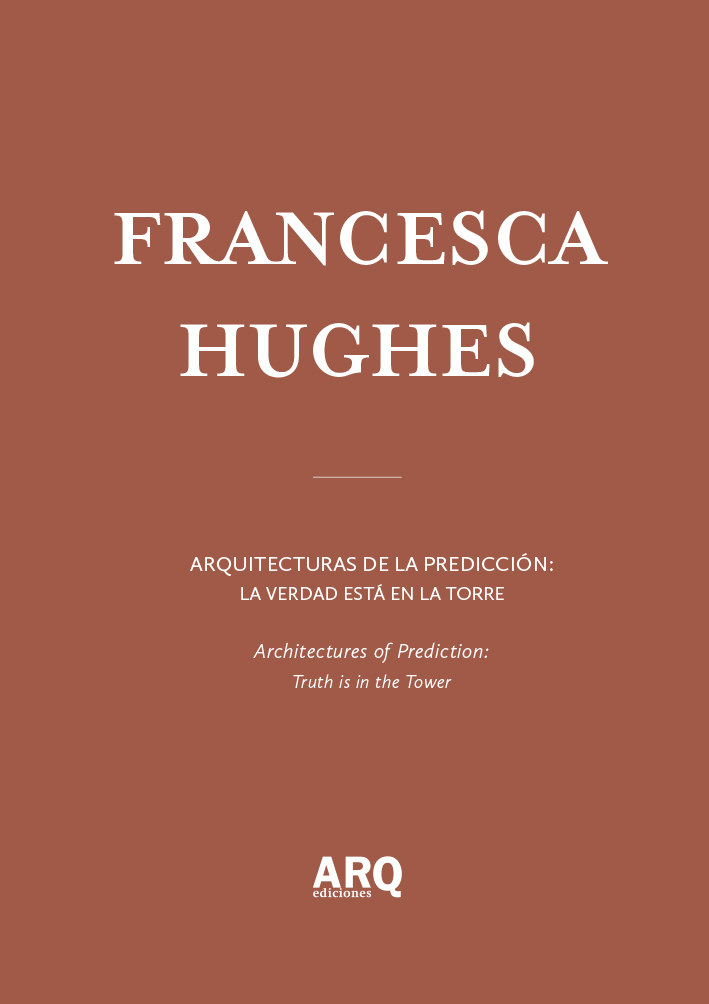
ARQ docs Francesca Hughes
Francesca Hughes; Francisco Díaz, Rayna Razmilic (eds.)
Tapa blanda; encuadernación a la vista con sobrecubierta
12 x 17 cm | 176 pp.
Español + Inglés
ISBN: 978-956-9571-74-9
Octubre 2019
Francesca Hughes es teórica de la arquitectura, profesora y especialista en la relación entre arquitectura y tecnología. Francesca es directora de la Escuela de Arquitectura de la Universidad de Tecnología de Sidney, Australia. Ha enseñado talleres y cursos de historia y teoría en la Architectural Association y la Bartlett School of Architecture, UCL en Londres, de donde es originaria. También ha enseñado en The Berlage, TU Delft, y ha sido profesora visitante en KU Leuven en Bélgica.
Comprar
Leer en ARQ+
Tapa blanda; encuadernación a la vista con sobrecubierta
12 x 17 cm | 176 pp.
Español + Inglés
ISBN: 978-956-9571-74-9
Octubre 2019
Francesca Hughes es teórica de la arquitectura, profesora y especialista en la relación entre arquitectura y tecnología. Francesca es directora de la Escuela de Arquitectura de la Universidad de Tecnología de Sidney, Australia. Ha enseñado talleres y cursos de historia y teoría en la Architectural Association y la Bartlett School of Architecture, UCL en Londres, de donde es originaria. También ha enseñado en The Berlage, TU Delft, y ha sido profesora visitante en KU Leuven en Bélgica.
Ha dado numerosas conferencias en EE.UU., Australia y Europa y ha publicado varios libros entre los que podemos destacar The Architecture of Error: Matter, Measure, and the Misadventures of Precision (MIT Press, 2014), Drawings that Count (AA Publications, 2012) y The Architect: Reconstructing her Practice (MIT Press, 1996). Actualmente está trabajando en un nuevo libro que examina la prehistoria de las relaciones entre arquitectura y computación: The Architect’s Computer: an Indiscrete History of the Universal Discrete Machine.
Contenidos
Lado A: “Arquitecturas de la predicción: la verdad está en la torre”
Lado B: “Arquitecturas de la predicción: desigualdades del hielo / Ceguera doble”
Ver más →
Contenidos
Lado A: “Arquitecturas de la predicción: la verdad está en la torre”
Lado B: “Arquitecturas de la predicción: desigualdades del hielo / Ceguera doble”
Francesca Hughes; Francisco Díaz, Rayna Razmilic (eds.)
Softcover; exposed binding with dust jacket
12 x 17 cm | 176 pp.
English + Spanish
ISBN: 978-956-9571-74-9
October 2019
Francesca Hughes is an architectural theorist, educator, and specialist in the relationship between architecture and technology. She is the Head of the School of Architecture at the University of Technology Sydney, Australia. She has taught design studios and history and theory courses at the Architectural Association and the Bartlett School of Architecture, UCL, in London, where she is originally from. She has also taught at The Berlage and TU Delft, and has been a visiting professor at KU Leuven in Belgium.
Buy
Read on ARQ+
Softcover; exposed binding with dust jacket
12 x 17 cm | 176 pp.
English + Spanish
ISBN: 978-956-9571-74-9
October 2019
Francesca Hughes is an architectural theorist, educator, and specialist in the relationship between architecture and technology. She is the Head of the School of Architecture at the University of Technology Sydney, Australia. She has taught design studios and history and theory courses at the Architectural Association and the Bartlett School of Architecture, UCL, in London, where she is originally from. She has also taught at The Berlage and TU Delft, and has been a visiting professor at KU Leuven in Belgium.
She has lectured widely across the US, Australia, and Europe, and has published several books, notably The Architecture of Error: Matter, Measure, and the Misadventures of Precision (MIT Press, 2014), Drawings that Count (AA Publications, 2012), and The Architect: Reconstructing her Practice (MIT Press, 1996). She is currently working on a new book examining the prehistory of the relationship between architecture and computing: The Architect’s Computer: an Indiscrete History of the Universal Discrete Machine.
Contents
Side A: “Architectures of Prediction: The Truth Is in the Tower”
Side B: “Architectures of Prediction: Inequalities of Ice / Double Blind”
Read more →
Contents
Side A: “Architectures of Prediction: The Truth Is in the Tower”
Side B: “Architectures of Prediction: Inequalities of Ice / Double Blind”
Ediciones ARQ - tienda
El Comendador 1936, oficina 101, Escuela de Arquitectura UC, Providencia, Santiago de Chile
Horario: Lun-Jue 10:00 a 17:30, Vie 10:00 a 15:30 hrs (excepto festivos)
tienda online︎︎︎
+56 22 3545630 | editorial@edicionesarq.cl
El Comendador 1936, oficina 101, Escuela de Arquitectura UC, Providencia, Santiago de Chile
Horario: Lun-Jue 10:00 a 17:30, Vie 10:00 a 15:30 hrs (excepto festivos)
tienda online︎︎︎
+56 22 3545630 | editorial@edicionesarq.cl